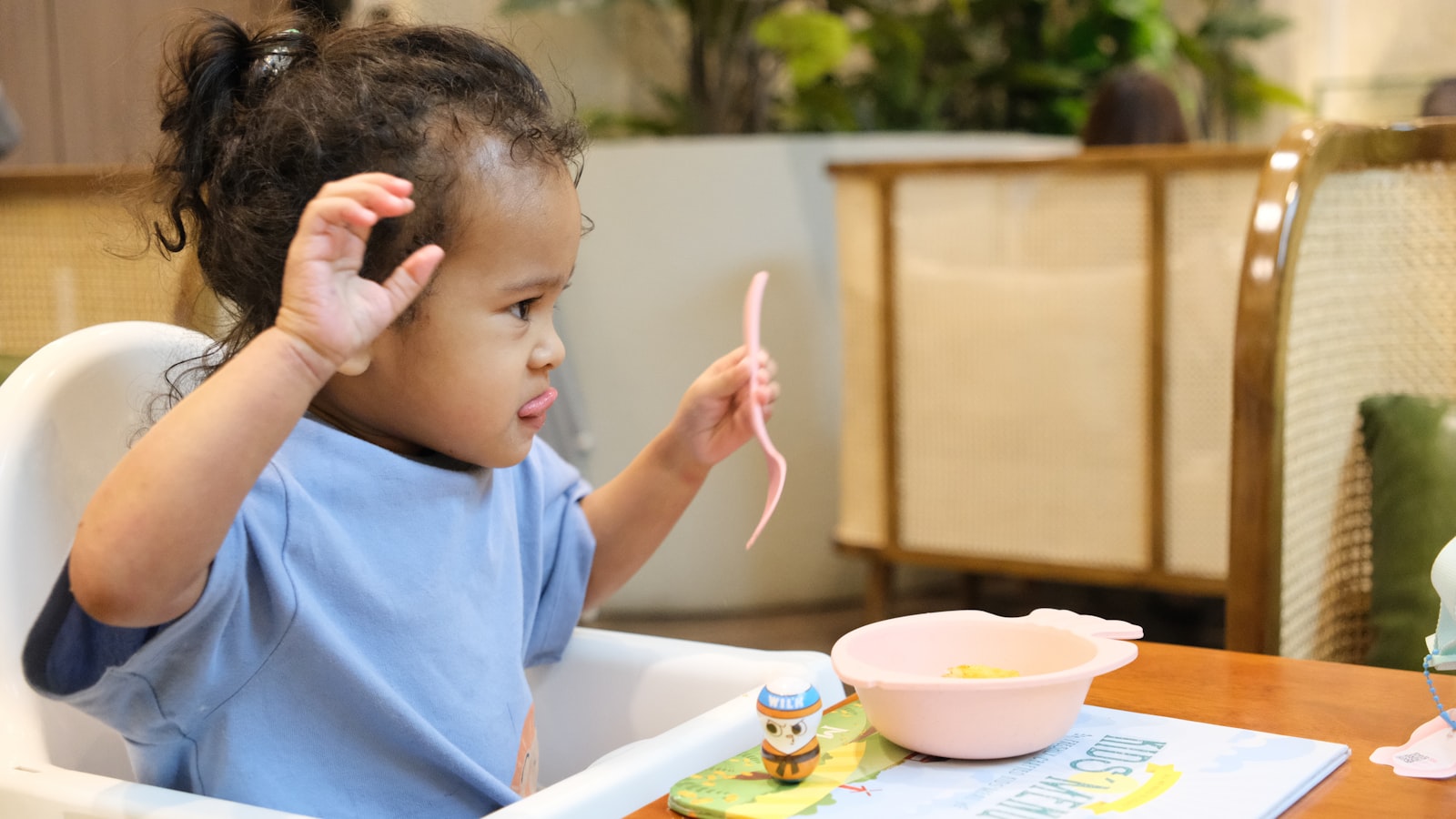
Neither method is safer. Studies have not found baby-led weaning increases choking risk compared with spoon-feeding, provided the food itself is prepared safely — which is the variable that actually matters 1. Most families end up mixing both: purees or fortified cereal for iron, finger foods for texture and motor practice. Start around 6 months, once your baby can sit with support.
Solid foods can start around 6 months, once a baby can sit with support and has lost the tongue-thrust reflex that pushes food back out 12. The bigger question most parents actually have isn't when — it's how: purees off a spoon, or baby-led weaning, where a baby self-feeds soft finger foods from the start and skips the pureed stage entirely.
What the research actually shows
The two methods get framed as a debate online, but the American Academy of Pediatrics treats them as complementary rather than competing 1. Studies comparing the two have not found that baby-led weaning increases choking risk compared with spoon-feeding, as long as the food itself is prepared safely — which is really the variable that matters, not the feeding method.
Choking and gagging are also easy to confuse and worth separating clearly. Gagging is loud, visible, and the body's normal way of moving food forward in the mouth before swallowing — it looks alarming but is not dangerous and doesn't need intervention. Choking is often silent, blocks the airway, and is a medical emergency 4. Baby-led weaning tends to produce more gagging early on, precisely because babies are managing texture themselves — that's a feature of the learning process, not a warning sign on its own.
Gagging | Choking | |
|---|---|---|
Sound | Loud — coughing, spluttering, retching | Often silent, or a high-pitched squeak |
Face | Red, watery eyes | Pale, then blue-tinged around lips |
Movement | Tongue forward, active | Little or no movement; may clutch at chest |
What to do | Stay calm, let them work it out, don't reach in | Act immediately — back blows and chest thrusts |
If you are starting solids by any method, it is genuinely worth watching an infant choking-response video before the first meal. Knowing the difference in advance is what lets you stay out of the way during a gag, which is when interfering does the most harm.
What safe finger foods actually look like
The shape and texture of the food matters more than the method. Safe first finger foods are soft enough to squish between two fingers, cut into pieces roughly the size and shape of an adult finger (long enough for a baby to grip with a fist and still have some sticking out), and never round or coin-shaped, which are the shapes most associated with choking in young children 4 — think whole grapes, whole cherry tomatoes, hot dog rounds, and hard raw vegetables.
Steamed vegetable sticks (carrot, sweet potato, broccoli florets) soft enough to mash with a fingertip
Ripe avocado, banana, or steamed pear cut into finger-length strips
Well-cooked pasta shapes, toast strips with a thin layer of nut butter (thinned, not spread thick), scrambled egg
Grapes, cherry tomatoes, and similar round foods only if quartered lengthwise, never left whole
Always seat a baby upright for feeding, never in a reclined position, and never leave a baby unattended while eating. Avoid the classic choking hazards entirely under 4 years: whole nuts, popcorn, hard sweets, chunks of raw apple or carrot, marshmallows, and thick globs of nut butter 4. If you have any choking risk factors or a family history of allergies, ask your pediatrician before introducing common allergens.
Foods to avoid completely in the first year
Separate from choking, a few foods are off the list for reasons of infection or nutrition:
Honey — under 12 months, never. Honey can carry botulism spores and is the only consistently confirmed dietary source of infant botulism, a severe illness 5. This includes honey baked into foods, honey-flavoured cereals, and honey on a pacifier.
Cow's milk as a main drink — under 12 months. It carries a risk of intestinal bleeding, and the protein and mineral load is hard on infant kidneys 3. Cow's milk *in* food, such as in cooking or yoghurt and cheese, is fine from around 6 months.
Fruit juice — under 12 months, in any amount 3.
Unpasteurised milk, cheese, yoghurt or juice, at any age in infancy 3.
Added salt and sugar, which infant kidneys and teeth do not need.
Allergens: introduce early, not late
The guidance here reversed completely, and plenty of well-meaning advice still reflects the old version. Delaying allergens does not prevent allergy — early introduction reduces it.
The landmark LEAP trial found that introducing peanut between 4 and 11 months significantly reduced the risk of peanut allergy in high-risk infants, and the resulting NIAID guidelines recommend early introduction of age-appropriate peanut-containing food 6.
Practically:
Still reading? You might want the next one in your inbox.
New guides go out the moment they're published — no noise in between.
Most infants can have peanut and other common allergens introduced at home, alongside other first foods 6.
Infants with severe eczema, egg allergy, or both are the group for whom medical assessment first is recommended — talk to your pediatrician or an allergist before introducing peanut 6.
Never whole nuts or thick nut butter. Use a thinned smooth nut butter, or a peanut puff dissolved and softened.
Introduce one allergen at a time, earlier in the day rather than at bedtime, so you can observe for a few hours.
Keep going. Regular, ongoing exposure is what maintains tolerance — a single introduction isn't the goal.
Purees still have a real role
Iron is the practical argument for not abandoning purees entirely. Breastfed babies in particular start running low on their prenatal iron stores around 6 months, and iron-fortified infant cereal or pureed iron-rich foods (meat, lentils, fortified cereal) are simply an easier way to get a meaningful, trackable amount into a baby who's still learning to self-feed 1. Most pediatric dietitians land on a middle ground: purees or fortified cereal for iron-dense nutrition, finger foods alongside for texture exposure and fine motor practice — not one method to the exclusion of the other.
Pairing iron-rich foods with something containing vitamin C — a little fruit alongside the meat or lentils — meaningfully improves how much iron is absorbed, which is a small, free optimisation worth knowing.
A practical way to start either way
Start once your baby sits with minimal support and shows real interest in food — reaching, leaning in, opening their mouth
Offer one new single-ingredient food at a time for a few days before combining, so a reaction is easy to trace
Keep meals low-pressure — some days a baby eats almost nothing, and that's normal in the first weeks
Breast milk or formula stays the primary source of nutrition through the first year regardless of method
Small amounts of water in an open or straw cup can be offered with meals from 6 months; it's for practice, not hydration
Expect mess. Squeezing, smearing and dropping are how texture gets learned, not misbehaviour
Call emergency services immediately for any sign of an allergic reaction: swelling of the lips, tongue or face, hives spreading over the body, vomiting straight after a new food, difficulty breathing, wheezing, or a baby who becomes pale and floppy. Call your pediatrician before introducing peanut if your baby has severe eczema, a known egg allergy, or both 6. Also raise persistent refusal of all solids past about 7–8 months, coughing or wetness in the voice during every meal, or a baby who never seems to move food to the back of their mouth — these can indicate a feeding or swallowing difficulty worth assessing.
FAQ
Is baby-led weaning more dangerous than purees?
Research comparing them hasn't found higher choking risk from the method itself. Food preparation — size, shape, texture — is what determines risk 1.
My baby gags at almost every meal. Should I stop?
Gagging is loud, visible and normal; it's how a baby moves food forward before swallowing. Silent distress is the emergency, not noisy gagging 4.
When should I introduce peanut?
Early — the evidence supports introduction in the first year, and most babies can start at home. Ask first if your baby has severe eczema or egg allergy 6.
Can I give my baby honey if it's cooked into something?
No. Under 12 months, honey is off the list in every form, including baked goods 5.
Do I have to choose one method?
No, and most families don't. Purees for iron, finger foods for texture, is the common and sensible middle ground 1.
How much should my baby actually eat at first?
Very little, and it varies enormously day to day. Milk remains the main nutrition source for the whole first year 1.
The method matters far less than the food. Soft, finger-shaped, squishable between two fingers, never round or coin-shaped. Start around 6 months when your baby can sit with support, introduce allergens early rather than late, keep iron in the picture, and never give honey or cow's milk as a drink before 12 months. Learn the difference between gagging and choking before the first meal.
Sources
Every claim, sourced
6 sources cited in this guide
- 1Starting Solid Foods — American Academy of Pediatrics (HealthyChildren.org)Clinical guidance · Accessed September 2026
- 2When, What, and How to Introduce Solid Foods — Centers for Disease Control and PreventionPublic health guidance · Accessed September 2026
- 3Foods and Drinks to Avoid or Limit — Centers for Disease Control and PreventionPublic health guidance · Accessed September 2026
- 4Choking Hazards — Centers for Disease Control and PreventionPublic health guidance · Accessed September 2026
- 5Botulism: Causes, Signs, Symptoms and Treatment — American Academy of Pediatrics (HealthyChildren.org)Clinical guidance · Accessed September 2026
- 6Addendum Guidelines for the Prevention of Peanut Allergy in the United States — National Institute of Allergy and Infectious Diseases (NIH), 2017Clinical guideline · Accessed September 2026