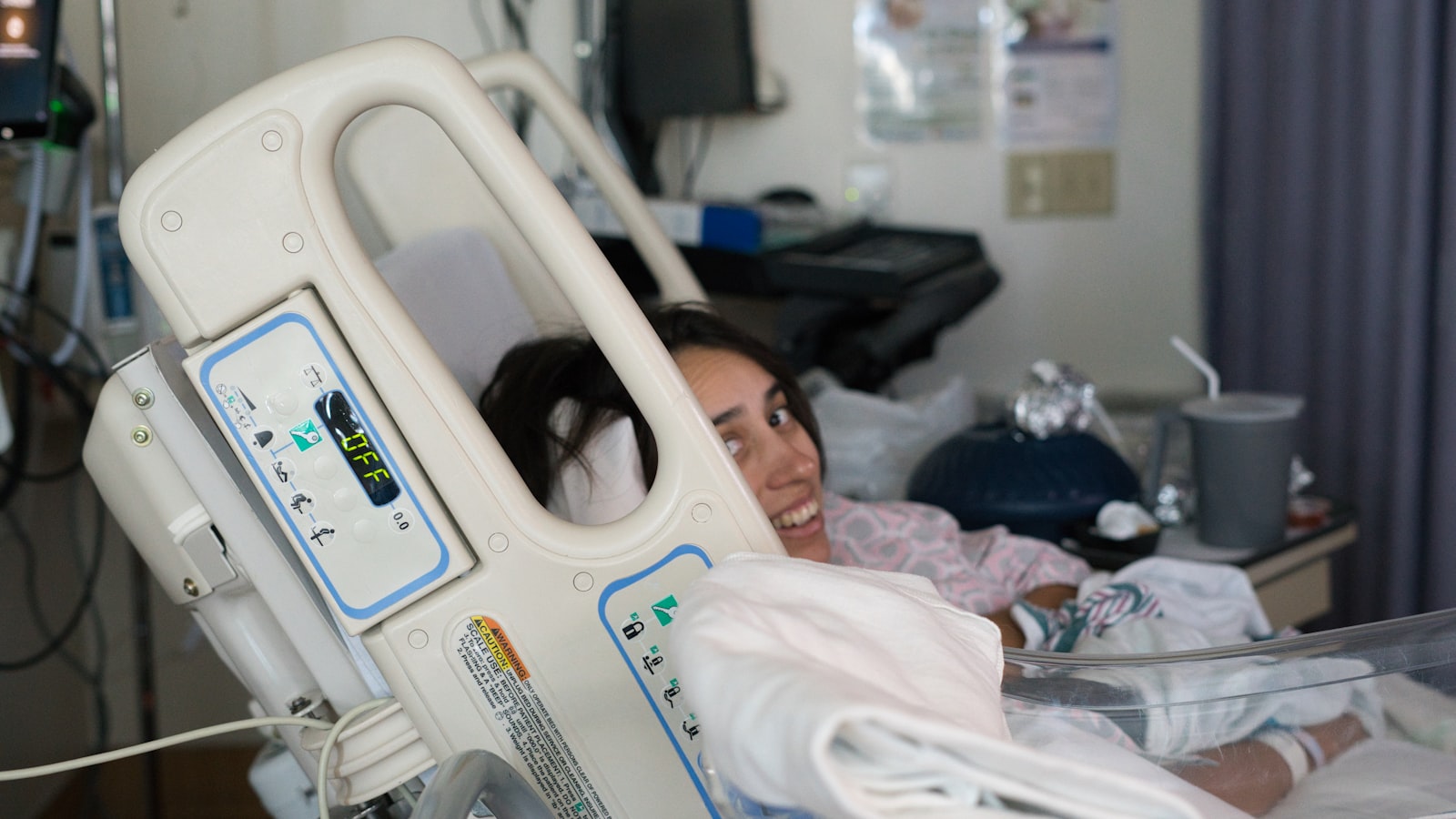
A cesarean is major abdominal surgery. Expect 3–4 days in hospital, walking within the first 24 hours, significant pain for the first two weeks, and meaningful improvement by week four. ACOG recommends contact with your care team within the first 3 weeks, not a single six-week visit, and a comprehensive visit no later than 12 weeks 1.
A cesarean is major abdominal surgery, and recovery from it deserves to be treated that way — even though it often gets compressed into a single 'six weeks and you're fine' timeline. ACOG's actual postpartum care model treats recovery as an ongoing process with checkpoints, not a single finish line, and it's worth knowing what's realistic at each stage 1.
The hospital stay
An uncomplicated cesarean typically means a hospital stay of three to four days 3. Care teams generally get patients up and walking within the first 24 hours — not because it's comfortable, but because early movement measurably lowers the risk of blood clots, one of the more serious risks after any surgery 2.
That first walk is genuinely hard, and it helps to know it's supposed to be. The goal isn't distance; it's circulation.
Weeks 1–2: incision healing, real pain
Stitches or staples are typically removed or dissolve within 10–14 days, though deeper tissue healing takes considerably longer than the visible incision suggests. Steri-strips, if used, usually fall off on their own within 7–10 days 2. Pain in these first two weeks is expected and often significant — this is the window where following prescribed pain management and avoiding heavy lifting (generally nothing heavier than the baby) matters most.
Practical things that make this fortnight materially easier:
Stay ahead of the pain rather than chasing it. Taking pain relief on schedule in the first week works better than waiting until it's bad, and being in less pain means moving more, which speeds everything else.
Splint the incision. Holding a pillow firmly against your abdomen when you cough, laugh, sneeze or stand up takes the strain off the wound and hurts far less.
Log-roll out of bed. Roll onto your side, drop your legs over the edge, and push up with your arms rather than sitting straight up.
Set up one level. Stairs are the thing people most underestimate. Keep nappies, water, snacks and phone chargers where you will actually be.
Feed in positions that avoid the incision. The football (rugby) hold and side-lying both keep the baby's weight off your abdomen.
Weeks 3–4: contact with your care team
ACOG recommends contact with your OB care team within the first three weeks postpartum, not waiting for a single six-week visit — a check-in that can catch problems (infection, mood changes, physical complications) earlier than a single follow-up would 1.
This is worth pushing for, because it is not yet universal practice. Research on implementation found that fewer than half of surveyed clinicians were actively offering contact at three weeks or sooner, even though the large majority did hold a comprehensive visit within 12 weeks 1. If nothing is booked in your first three weeks, calling to ask for it is reasonable and is in line with the guideline.
Weeks 4–6: gradual, real improvement
By around week four, many people notice day-to-day movement getting easier — walking feels less effortful, and getting up from a bed or couch takes less deliberate effort. Week five often brings more of a routine and a bit more physical confidence, with the sharpest discomfort starting to soften.
Two common questions land here, and both have the same answer — ask your own provider, because it depends on your recovery:
Driving. The usual constraints are being off opioid pain medication and being able to brake hard and check blind spots without hesitating from pain. That is commonly around two weeks but varies.
Exercise. Walking early and often is encouraged. Anything involving abdominal loading, impact or heavy lifting typically waits until you've been cleared.
Call your provider for fever, redness, warmth, or discharge from the incision, worsening rather than improving pain, heavy bleeding (soaking a pad an hour, or passing clots larger than a golf ball), or any symptoms of a blood clot such as calf swelling, pain or redness, chest pain or shortness of breath. Seek emergency care for chest pain, difficulty breathing, a severe headache with vision changes, a seizure, or thoughts of harming yourself or your baby. These warrant prompt evaluation, not a wait-and-see approach 4.
What the comprehensive visit should actually cover
ACOG's comprehensive postpartum visit is not a quick look at the scar. It is meant to be a full assessment across 1:
Still reading? You might want the next one in your inbox.
New guides go out the moment they're published — no noise in between.
mood and emotional well-being
infant care and feeding
sexuality, contraception and birth spacing
sleep and fatigue
physical recovery from birth
chronic disease management
health maintenance
If your appointment doesn't touch most of that list, you are entitled to raise the rest. Writing down two or three things beforehand helps, because these visits are short and it is genuinely hard to remember what you wanted to ask while holding a newborn.
The scar, longer term
The visible line settles over many months. Expect it to look raised, pink or darker than surrounding skin for a while, and to fade gradually over roughly a year. Numbness, tingling, itching or an odd tight sensation around the scar is extremely common and usually improves, though a band of numbness above the incision can persist.
Once fully healed and cleared by your provider, gentle scar massage is commonly suggested to keep the tissue mobile. Sun protection over the scar for the first year reduces how dark it sets. A scar that becomes increasingly raised, itchy and extends beyond the original incision line may be forming a keloid, which is worth showing to your provider — it is much easier to treat early.
Beyond six weeks
ACOG recommends a comprehensive postpartum visit no later than 12 weeks after delivery 1, and many people are still rebuilding pelvic floor and abdominal strength — and catching up on sleep — well after the standard six-week mark. Recovery being ongoing past that point isn't a sign anything's wrong; it's simply a more honest timeline than the shorthand version implies.
Two things commonly need attention beyond the "cleared" mark and are worth asking about specifically: pelvic floor function (a cesarean does not exempt you from pregnancy's effect on the pelvic floor), and abdominal separation, which affects plenty of people after a surgical birth too. Pelvic floor physical therapy is a normal, effective referral and not a sign that something has gone wrong.
FAQ
How long is the hospital stay after a cesarean?
Typically three to four days for an uncomplicated birth 3.
When can I drive again?
Commonly around two weeks, but the real test is being off opioid pain medication and able to brake hard without hesitating from pain. Ask your own provider.
How much should I be lifting?
Generally nothing heavier than your baby for the first couple of weeks.
When should my first postpartum appointment be?
ACOG recommends contact within the first three weeks, not a single six-week visit 1.
Is numbness around the scar normal?
Yes, and it's very common. It usually improves, though a band of numbness above the incision can persist.
How long does recovery actually take?
Longer than six weeks for most people. ACOG's comprehensive visit is at up to 12 weeks, and rebuilding strength often continues past that 1.
Three or four days in hospital, walk within 24 hours, hardest fortnight first, real improvement by week four. Splint the incision, log-roll out of bed, and stay ahead of the pain. Ask for the three-week contact ACOG recommends rather than waiting for a single six-week visit — and treat the twelve-week visit as a full review, not a scar check.
Sources
Every claim, sourced
4 sources cited in this guide
- 1Optimizing Postpartum Care (Committee Opinion No. 736) — American College of Obstetricians and Gynecologists, 2018Clinical guideline · Accessed September 2026
- 2
- 3Cesarean Birth — American College of Obstetricians and GynecologistsPatient guidance · Accessed September 2026
- 4Postpartum Toolkit — American College of Obstetricians and Gynecologists, 2018Clinical toolkit · Accessed September 2026