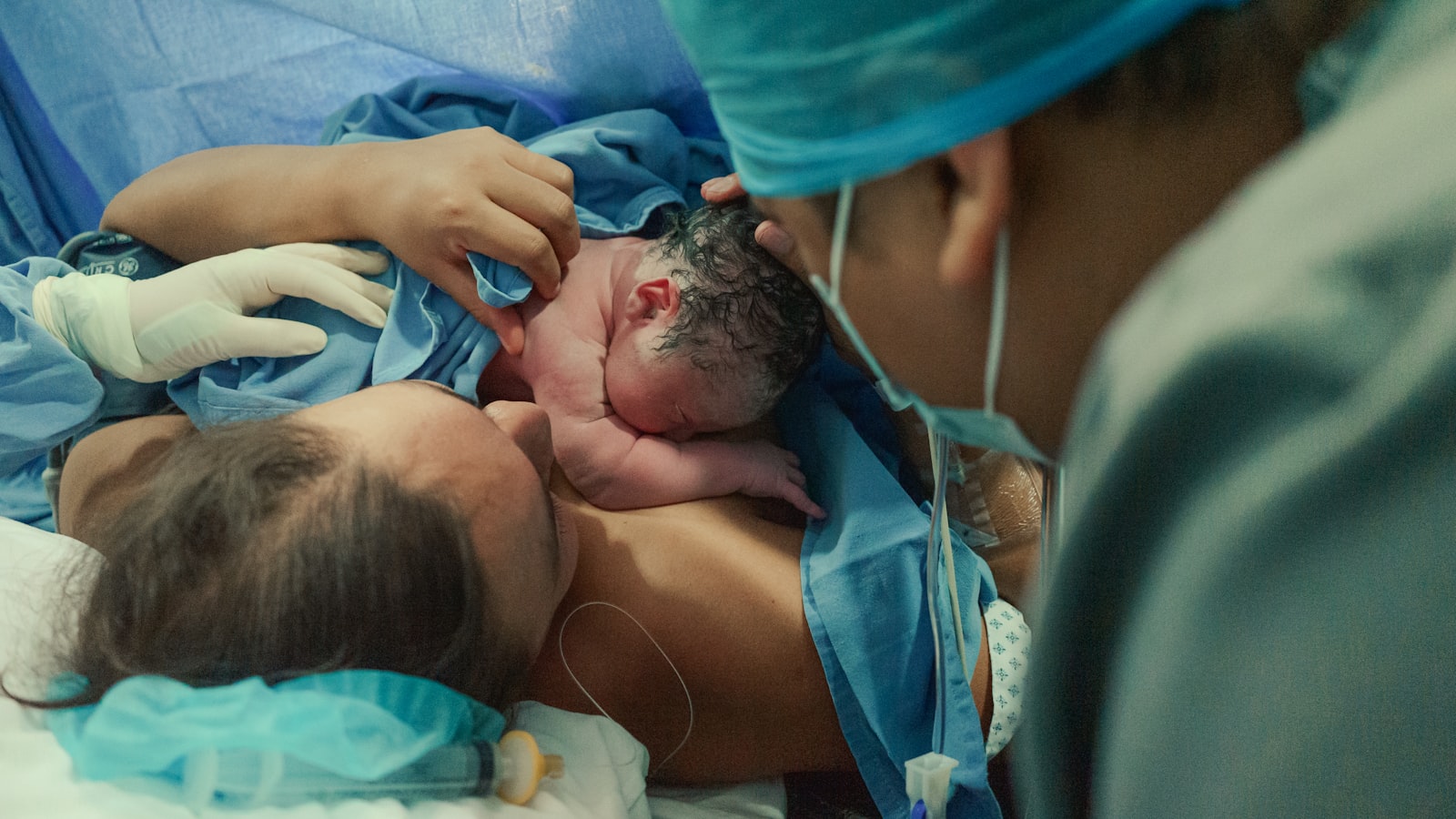
The US is the only OECD country with no national paid parental leave; the global average for paid maternity leave alone is 29 weeks 1. FMLA gives 12 weeks unpaid, and only if you meet its thresholds 2. Fourteen states and DC now run paid family leave programmes — check yours even if your employer offers nothing, because most people never look 3.
Somewhere between the birth and the return-to-work date, most American parents run the same math: how many weeks of pay can we actually afford to lose. For a lot of families, the honest answer is fewer than they need — not because they haven't planned carefully, but because the country they live in simply doesn't guarantee what most of the rest of the developed world does.
The US is an outlier, and not in a good way
The United States is the only country in the Organisation for Economic Co-operation and Development — the club of the world's wealthiest economies — without a national paid parental leave policy. The global average for paid maternity leave alone is 29 weeks, and most countries offer far more than the bare minimum: it isn't just wealthy peers like Canada or the UK that provide paid leave, but the vast majority of countries worldwide, wealthy or not 1.
That gap isn't an accident of policy timing — it reflects a genuinely different starting assumption about who bears the cost of a new baby's first months: the family alone, or the family plus some shared public system. In the US, by default, it's the family alone.
What federal law actually gives you
The Family and Medical Leave Act guarantees up to 12 weeks of unpaid, job-protected leave for the birth of a child — but only at companies with 50 or more employees within 75 miles, and only for employees who've worked there at least 12 months and logged at least 1,250 hours in that time 2.
That eligibility bar quietly excludes a lot of new parents: someone who started a job eight months before their due date, someone working part-time hours that never add up to 1,250 in a year, or anyone at a small business with fewer than 50 employees. "Job-protected" is also a narrower promise than it sounds — it means your employer can't fire you for taking the leave, not that you'll be paid a single dollar while you're on it.
FMLA requirement | What it means in practice |
|---|---|
Employer has 50+ employees within 75 miles | Small employers are exempt entirely 2 |
You've worked there 12+ months | A recent job change can disqualify you |
You've logged 1,250+ hours in those 12 months | Roughly 24 hours a week — part-time often falls short |
Up to 12 weeks | Per 12-month period, and unpaid |
Job-protected | You can't be fired for taking it — you aren't paid for it |
One thing worth knowing: FMLA applies to both parents, and it covers bonding with a new child, not only physical recovery. Non-birthing parents and adoptive parents are covered on the same terms.
The states that do more
Fourteen states and Washington, D.C. now run mandatory paid family leave programs funded through payroll contributions: California, Colorado, Connecticut, Delaware, Maine, Maryland, Massachusetts, Minnesota, New Jersey, Oregon, Rhode Island, Virginia, Washington, and D.C. A few of these — Delaware, Maine, and Minnesota — only began paying out benefits in 2026, so they're genuinely new even to people who've lived in those states for years 3.
If you live in one of those states, you likely qualify for weeks of paid leave through a state fund — even if your employer has no parental leave policy of its own, and even if you've never heard your HR department mention it. Most people never check, and never apply, simply because nobody told them the program existed.
State programmes typically pay a percentage of your usual wages rather than the full amount, often with a weekly cap, and they usually run through the state rather than your employer — which means your employer offering nothing doesn't disqualify you. Eligibility is usually based on earnings history rather than tenure with one employer, so it can cover people FMLA doesn't.
Stacking is how most people actually build a leave
Very few families get their leave from one source. The usual approach is to layer several, in roughly this order:
Short-term disability, if you have it, covering physical recovery — commonly 6–8 weeks, often longer after a caesarean.
State paid family leave, if you're in one of the fourteen states or DC 3.
Employer paid parental leave, if any exists.
Accrued PTO and sick leave, which some employers require you to use and others let you save.
Unpaid FMLA weeks, to extend job protection to the full 12 2.
Still reading? You might want the next one in your inbox.
New guides go out the moment they're published — no noise in between.
Two questions decide how well this works, and both are worth asking HR in writing: does your employer's paid leave run concurrently with FMLA or after it, and are you required to exhaust PTO first? Concurrent policies mean 12 weeks total rather than 12 plus whatever else you have.
How to build a real plan before the baby comes
Read your employee handbook, then call HR directly. Some companies offer partial paid leave that isn't advertised well, or that stacks on top of FMLA and any state benefit — the only way to find out is to ask specifically, in writing, rather than assume the handbook is the whole story.
Check your state's program, even if you're not sure you qualify. Even a partial wage-replacement benefit for 6–12 weeks changes the math significantly, and eligibility rules are often more generous than people assume before checking 3.
Ask about short-term disability. Many employer-sponsored STD plans cover the physical recovery period after childbirth — often 6–8 weeks — as a covered disability, separate from any parental leave policy. It's easy to miss because it's filed under a completely different benefits category than "leave."
Budget the unpaid gap specifically. Don't leave it to "we'll figure it out." Write down the actual number of unpaid weeks and exactly what bridges them — savings, PTO, a partner's income — the same way you'd budget for any other planned, temporary income drop.
Time the paperwork early. FMLA and state leave applications both have lead-time requirements — filing as soon as you know your due date avoids a scramble later, and gives HR time to fix any errors before you actually need the leave to start.
Confirm who pays your health insurance premiums during unpaid leave. This catches people out badly: FMLA protects your coverage, but you usually still owe your share, and a missed payment can lapse a plan.
Consider staggering leave with a partner rather than overlapping it entirely, which can extend the total period a parent is home.
If you're not eligible for any of it
This is a large group and it's worth naming rather than skipping:
Check state law anyway. Some states set lower employer-size thresholds than FMLA, so a small employer may still be covered.
Ask for an unpaid arrangement in writing. Many small employers will agree to hold a role even when not legally required.
Ask about a phased return or temporary part-time hours, which costs an employer less than replacing you.
Check whether your state has temporary disability insurance separate from paid family leave — a handful do.
Look into your employer's short-term disability, which sometimes exists even where parental leave doesn't.
FAQ
Does the US have paid parental leave?
Does FMLA pay me?
No. It provides up to 12 weeks of unpaid, job-protected leave for those who qualify 2.
Do I qualify for FMLA?
Only if your employer has 50+ employees within 75 miles and you've worked 12+ months and 1,250+ hours there 2.
Can fathers and non-birthing parents take FMLA?
Yes — it covers bonding with a new child, on the same terms, for both parents 2.
My employer offers nothing. Am I out of options?
Not necessarily. State paid family leave runs through the state, not your employer, so employer policy doesn't disqualify you 3.
What's the most commonly missed benefit?
Short-term disability covering the physical recovery period after birth. It's filed separately from "leave" and people routinely don't know they have it.
There's no federal safety net here — but there is often more help available than people realize, especially at the state level. Find out exactly what you're entitled to before you need it, not during your leave, when you'll have far less time and energy to chase down the answer. Check short-term disability, check your state programme, and ask HR in writing whether paid leave runs concurrently with FMLA — that one answer can change your total by weeks.
Sources
Every claim, sourced
3 sources cited in this guide
- 1Paid Family Leave Across OECD Countries — Bipartisan Policy CenterPolicy research · Accessed September 2026
- 2Fact Sheet #28: The Family and Medical Leave Act — U.S. Department of Labor, Wage and Hour DivisionFederal law · Accessed September 2026
- 3State Paid Family Leave Laws Across the U.S. — Bipartisan Policy CenterPolicy research · Accessed September 2026